
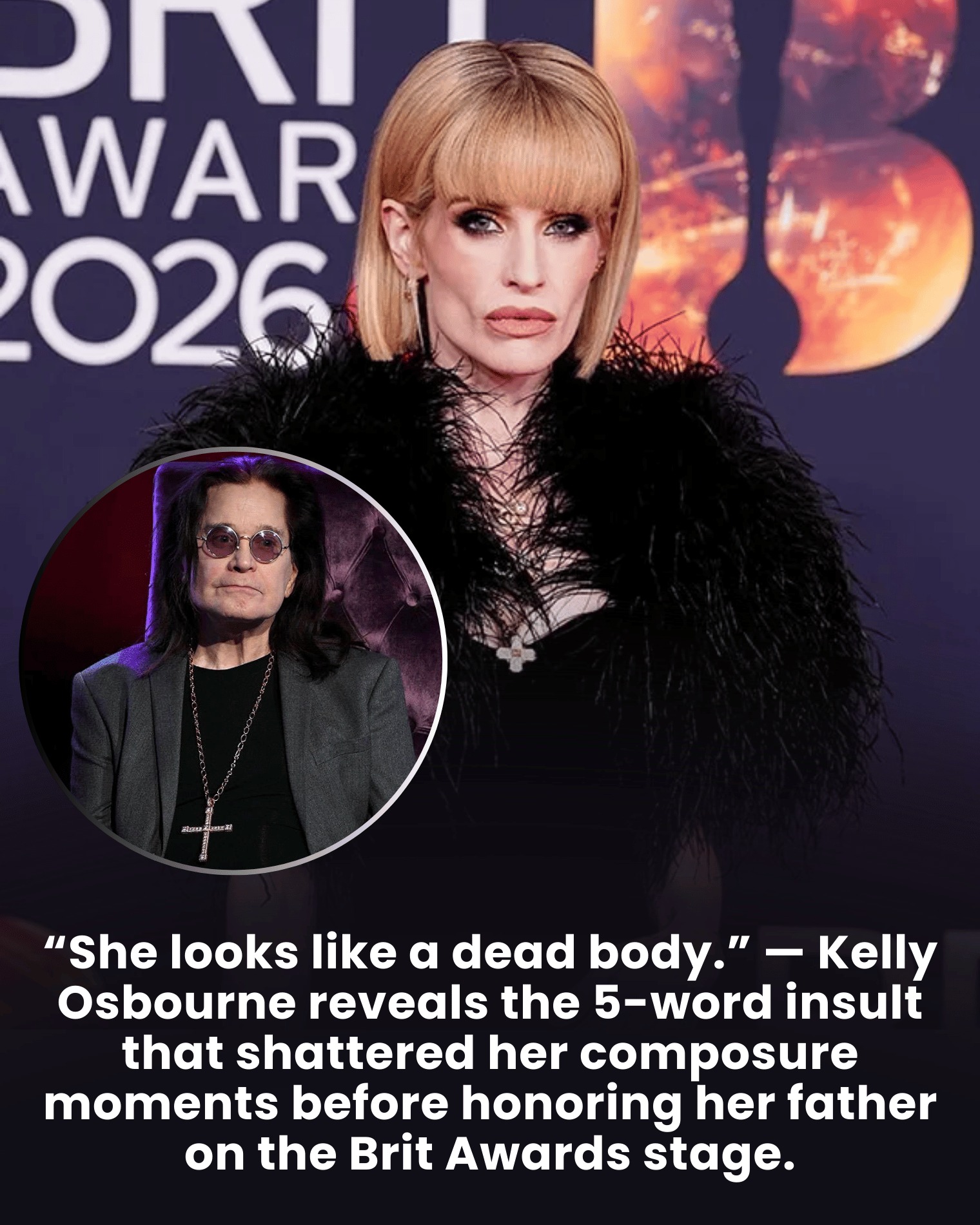
Walking the red carpet at Manchester's Co-op Live, Kelly Osbourne appeared poised and composed in a floor-length black velvet gown that many fashion critics praised as one of the evening's most striking looks. The event carried deep emotional weight: she was there to honor her father, Ozzy Osbourne, whose legacy continues to loom large over British music.
But behind the polished exterior, Kelly was absorbing something far uglier.
Moments before stepping onto the stage, a viral comment began circulating online — five words that cut through the glamour: "She looks like a dead body."
The cruelty, she later admitted, shattered her composure.
Grief is already disorienting. Add public scrutiny, camera flashes, and a global audience, and the pressure multiplies. Kelly has been candid about navigating personal loss while also dealing with changes to her appearance. Her slimmer frame, shaped by lifestyle adjustments and stress, became the target of strangers who felt entitled to dissect it.
On her Instagram Stories, she addressed the remark directly, calling it a "special kind of cruelty." She explained that being criticized during a moment meant to honor her father felt like being "kicked while she's down." The words weren't just an insult — they were a reminder of how quickly empathy evaporates online.
The irony is stark. Red carpets are meant to celebrate art and legacy. Instead, they often morph into arenas of microscopic judgment. For Kelly, the night was about paying tribute to a rock icon who shaped generations. Yet the narrative shifted to her body.
Her response did not spiral into retaliation. Instead, she reframed it as a reflection on character. Those who dehumanize others during vulnerable moments, she implied, reveal more about themselves than their target ever could.
The backlash to the comment was swift. Fans and fellow public figures rallied behind her, condemning the culture of body-shaming — especially toward women experiencing grief. The conversation expanded beyond one insult to a broader reckoning: why are celebrities treated as fair game for cruelty, particularly during periods of visible pain?
Kelly's situation highlights the paradox of fame. Public figures are expected to appear strong, polished, and grateful, even while processing private sorrow. Any visible change becomes fodder for speculation. Any sign of vulnerability invites commentary.
Yet on that stage in Manchester, Kelly did what she came to do. She honored her father. She stood in front of thousands and carried herself with dignity despite the noise.
The black velvet gown that drew headlines was never the story. The story was resilience.
In confronting the insult publicly, Kelly Osbourne turned a moment of humiliation into a call for compassion. And in doing so, she reminded the world that behind every red-carpet photo is a human being — one who deserves grace, especially when grief is already heavy enough.